5 Home Upgrades That Lower Cooling Costs in Washington

5 Home Upgrades That Lower Cooling Costs in Washington
Washington summers do not feel quite as mild as they once did.
Homeowners in Seattle, Bothell, Woodinville, Lynnwood, Edmonds, Mill Creek, and communities across North King County and South Snohomish County are paying closer attention to how well their homes handle hot weather.
A house that traps heat upstairs, struggles to cool down at night, or requires portable air conditioners in every bedroom can quickly become uncomfortable.
It can also become harder to sell.
Today’s buyers are not only looking at the kitchen, flooring, and curb appeal. They are also asking practical questions:
- Will this home stay comfortable during a heat wave?
- How expensive will it be to cool?
- Does the upstairs become unbearably hot?
- Are the windows, insulation, and thermostat outdated?
- Will we need to make energy upgrades immediately?
The good news is that you may not need to install a completely new cooling system to make a meaningful difference.
Several targeted home improvements can lower cooling costs, improve comfort, and make your property more attractive to future buyers.
Quick Answer: What Home Improvements Lower Cooling Costs?
Air sealing, improved insulation, ceiling fans, smart thermostats, and energy-efficient windows can reduce heat gain and help a Washington home stay cooler.
The best return often comes from addressing air leaks and insulation before investing in more expensive upgrades.
Why Cooling Efficiency Matters When Selling a Washington Home
Cooling costs may not be the first feature mentioned in a listing, but comfort affects how buyers experience a home.
A buyer touring an overheated second floor may immediately start calculating the cost of installing air conditioning.
A stuffy bedroom, sun-baked living room, or visibly struggling cooling system can create concern, even when the rest of the home looks attractive.
Energy-efficiency improvements can help sellers present a home that feels:
- Cooler and more comfortable
- Better maintained
- Less expensive to operate
- More prepared for warmer summers
- More appealing during a summer showing
These upgrades can also reduce drafts, improve winter comfort, and lower heating costs.
That year-round benefit is especially valuable in Western Washington, where homeowners need to manage both summer heat and long, damp winters.
1. Air Sealing: Stop Cool Air From Escaping
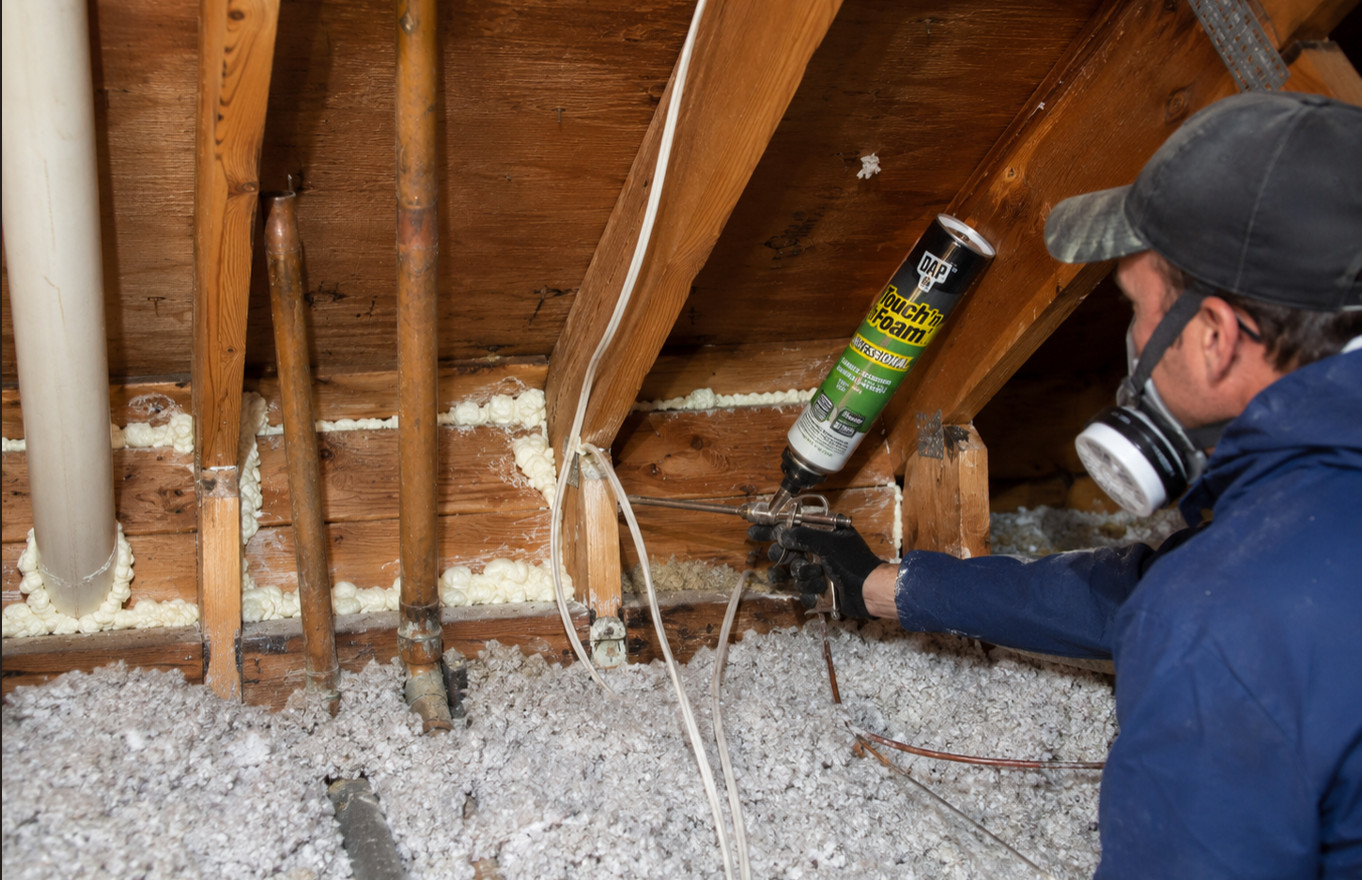
Air sealing is one of the least visible home improvements, but it can deliver one of the most noticeable comfort improvements.
Small gaps and cracks allow cooled air to escape while warm outdoor air enters the home.
Common problem areas include:
- Attic access points
- Plumbing and electrical penetrations
- Window and door frames
- Recessed lighting
- Baseboards
- Fireplace surrounds
- Exterior wall penetrations
- Duct connections
- Crawl spaces
The U.S. Department of Energy estimates that sealing uncontrolled air leaks can reduce heating and cooling bills by approximately 10% to 20%, although actual savings depend on the home and the severity of the leaks.
Why buyers care
A properly sealed home can feel more consistent from room to room.
Buyers may not see the air sealing itself, but they can notice the results:
- Fewer drafts
- More stable indoor temperatures
- Less outside noise
- Reduced dust entry
- Better cooling performance
- Improved winter comfort
Air sealing can also show that the homeowner has addressed the building itself instead of simply covering cosmetic problems.
Estimated seller ROI: High
Air sealing often offers a strong practical return because it can be less expensive than replacing windows or installing a new cooling system.
Its value comes from:
- Potential utility savings
- Improved comfort during showings
- Better performance from existing heating and cooling equipment
- Reduced buyer concern about drafts and energy waste
Air sealing is generally most effective when completed after a professional energy assessment identifies the largest leakage points.
2. Insulation: Keep Summer Heat Out
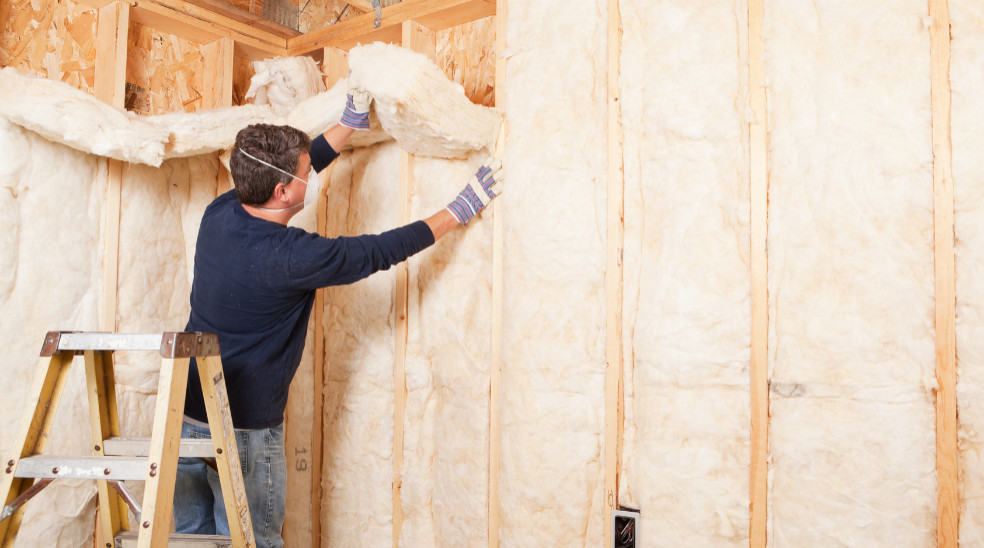
Many homeowners think insulation only matters during winter.
It also helps slow the movement of outdoor heat into the home during summer.
Attics are especially important. On a hot, sunny day, the roof and attic can absorb a significant amount of heat. Without adequate insulation and proper air sealing, that heat can move into upstairs bedrooms and living areas.
The Department of Energy reports that homeowners may save up to 20% on heating and cooling costs, or up to 10% on total home energy costs, by properly insulating their homes. Actual savings vary based on the home’s age, existing insulation, climate, and energy use.
Areas that may need attention
- Attic floors
- Sloped ceilings
- Exterior walls
- Crawl spaces
- Floors above garages
- Rim joists
- Ductwork in unconditioned areas
Older homes throughout Seattle, Edmonds, Lynnwood, and nearby communities may have insulation levels that no longer meet modern expectations.
Even newer homes may have missing, compressed, shifted, or unevenly installed insulation.
Why buyers care
A well-insulated home can provide:
- Cooler upstairs rooms
- More even temperatures
- Lower heating and cooling demand
- Less noise transfer
- Better year-round comfort
- Improved energy efficiency
Buyers may also appreciate documentation showing when and where insulation was added.
Estimated seller ROI: High
Insulation can provide a strong return when the home is clearly under-insulated.
However, sellers should avoid adding insulation without first addressing air leaks or moisture problems.
Covering an active leak or ventilation issue can create a more expensive problem later.
The best approach is often:
- Inspect the attic and crawl space
- Address moisture and ventilation concerns
- Seal major air leaks
- Add insulation where needed
- Keep receipts and project documentation for buyers
3. Ceiling Fans: Improve Comfort Without Overworking the AC
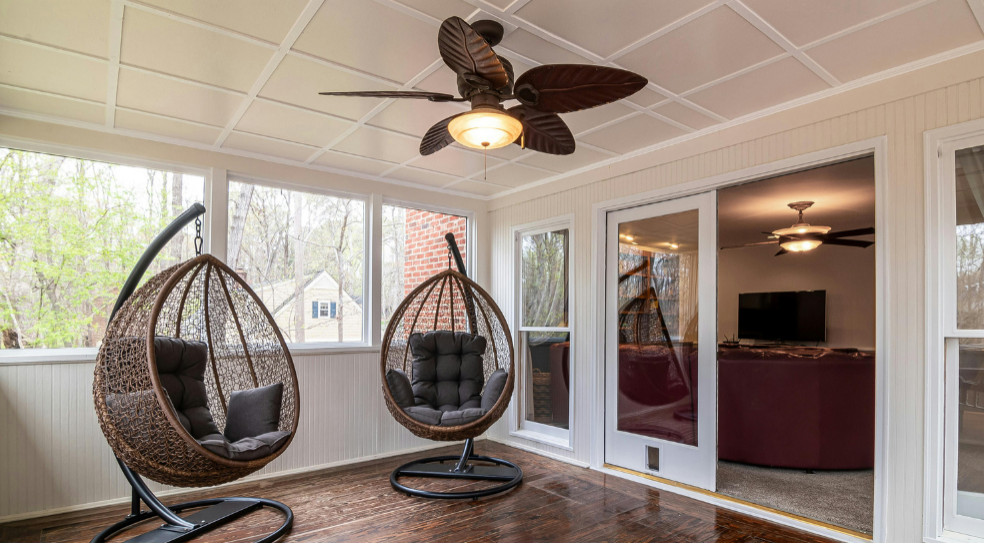
Ceiling fans do not lower the temperature of a room. They move air across the skin, helping people feel cooler.
That distinction matters.
A ceiling fan should be turned off when nobody is using the room because fans cool people, not empty spaces.
When used with air conditioning, the Department of Energy says a ceiling fan may allow homeowners to raise the thermostat setting by approximately 4°F without reducing comfort.
Where ceiling fans work best
- Primary bedrooms
- Upstairs bedrooms
- Living rooms
- Bonus rooms
- Covered patios
- Rooms with vaulted ceilings
A simple, modern ceiling fan can also improve the appearance of a room by replacing an outdated fixture.
Why buyers care
Buyers often view ceiling fans as a practical bonus, particularly in bedrooms and upper-floor living spaces.
They can make a home feel more prepared for warmer temperatures without creating the impression that buyers will need to rely entirely on portable fans.
Estimated seller ROI: Moderate to high
Ceiling fans are generally affordable compared with major mechanical or window upgrades.
Their return is strongest when they:
- Replace visibly dated fixtures
- Match the scale and design of the room
- Operate quietly
- Include an integrated light where appropriate
- Improve comfort in rooms that tend to overheat
Avoid oversized, ornate, or highly personalized fans. A clean, simple style is more likely to appeal to a wider range of buyers.
4. Smart Thermostats: Make Cooling Easier to Control
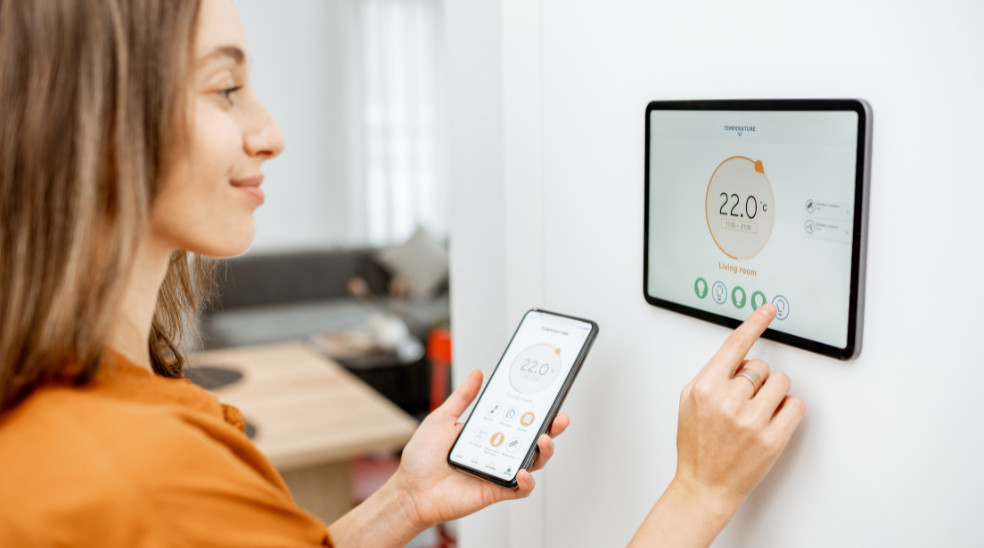
A smart thermostat helps homeowners control heating and cooling based on schedules, occupancy, and preferred temperature settings.
ENERGY STAR reports that a certified smart thermostat can save approximately 8% on heating and cooling bills, or around $50 per year on average. Savings may be higher in homes with larger energy bills or homes that are unoccupied for much of the day.
A smart thermostat may offer features such as:
- Automatic scheduling
- Mobile temperature control
- Energy-use reports
- Maintenance reminders
- Vacation settings
- Temperature adjustments based on occupancy
- Compatibility with some heat pump systems
Why buyers care
A smart thermostat is a visible efficiency upgrade.
Unlike insulation or air sealing, buyers can immediately see and understand it.
It can make the home feel more current while giving buyers greater control over comfort and energy use.
Estimated seller ROI: High for the cost
A smart thermostat is typically a relatively small improvement that can provide:
- A more modern appearance
- Easier temperature control
- Potential energy savings
- A simple selling feature
- Better management of heating and cooling equipment
Smart thermostats commonly cost between $50 and $300 before installation or available discounts, depending on features and system compatibility.
Before purchasing one, confirm that it is compatible with the home’s heating and cooling system. Heat pumps, electric resistance systems, multi-stage equipment, and homes without a common wire may require particular models or professional installation.
5. Energy-Efficient Windows: Reduce Heat Gain and Improve Comfort
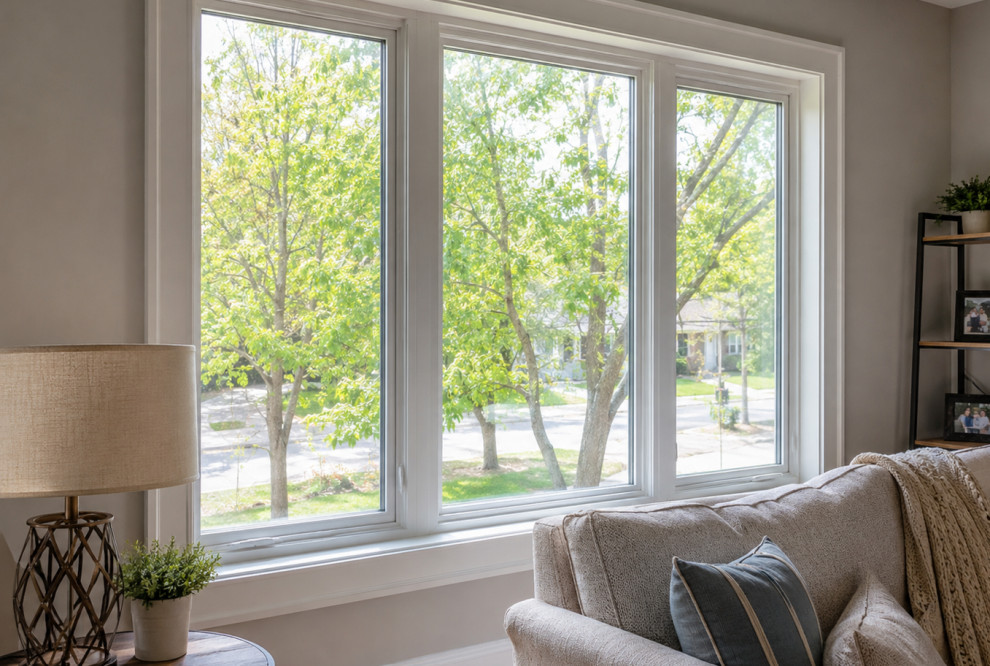
Windows can have a major effect on indoor temperature.
The Department of Energy estimates that heat gain and heat loss through windows account for approximately 25% to 30% of residential heating and cooling energy use.
Energy-efficient windows may include:
- Double- or triple-pane glass
- Low-emissivity coatings
- Insulated frames
- Warm-edge spacers
- Improved weatherstripping
- Lower solar heat-gain ratings
- Proper professional installation
In rooms with strong afternoon sun, better-performing windows can reduce solar heat gain and make the area more comfortable.
Why buyers care
Buyers often notice windows that are:
- Drafty
- Fogged between panes
- Difficult to open
- Damaged
- Single-pane
- Poorly sealed
- Visibly deteriorated
Newer windows may improve energy efficiency, noise reduction, comfort, appearance, and ease of operation.
Estimated seller ROI: Moderate
Window replacement can offer valuable benefits, but it is usually the most expensive improvement on this list.
Replacing every window solely to reduce cooling costs may not produce a fast financial payback before a sale.
Window replacement may make more sense when:
- Existing windows have failed seals
- Frames are damaged or rotting
- Windows are difficult to operate
- Single-pane windows are causing comfort problems
- The home experiences significant traffic noise
- Several windows already need replacement
- The project will noticeably improve curb appeal
If the windows are functional, sellers may achieve a better return by first considering:
- Air sealing around the frames
- Repairing damaged weatherstripping
- Installing quality window coverings
- Adding exterior shading
- Using approved window inserts
- Replacing only the worst-performing windows
Cooling-Cost Improvements Compared
The Department of Energy notes that storm-window inserts can improve the thermal performance of existing windows and may be easier and less expensive than complete window replacement.
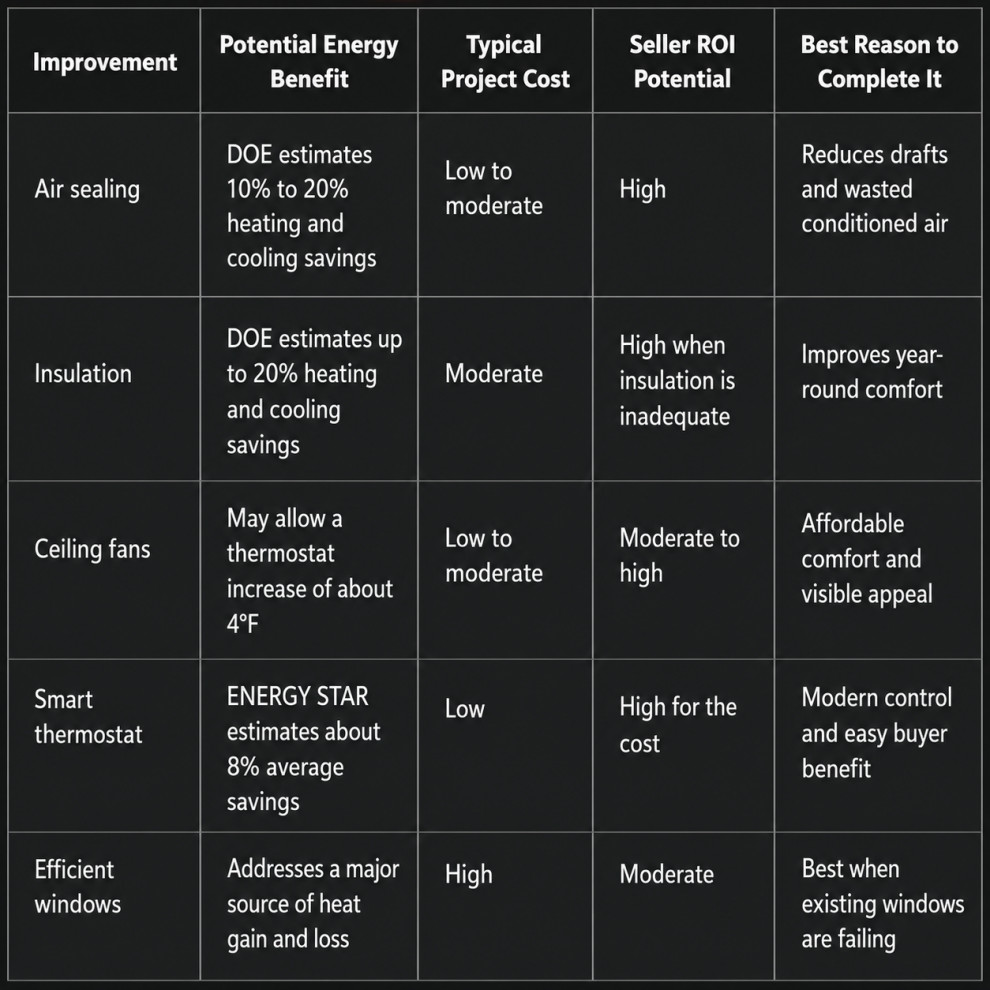
These savings figures are national estimates, not guaranteed returns for an individual home. Actual results depend on the building, equipment, household habits, local utility rates, installation quality, and existing conditions.
Which Cooling Upgrade Should Sellers Complete First?
For many homes, the best order is:
1. Start with an energy assessment
Determine where the home is gaining heat and losing conditioned air.
2. Address air leaks
Sealing gaps can improve the performance of nearly every other energy upgrade.
3. Improve insulation
Focus on the attic, crawl space, rim joists, and other weak areas identified during the assessment.
4. Add low-cost comfort features
Ceiling fans, window coverings, and a compatible smart thermostat can create visible, easy-to-understand benefits.
5. Replace windows selectively
Prioritize damaged, failed, or poorly performing windows instead of automatically replacing every unit.
This approach helps sellers avoid spending heavily on improvements that buyers may not fully value.
Do Energy-Efficient Improvements Increase Home Value?
Energy upgrades do not always increase a home’s sale price dollar for dollar.
Their value often appears in several ways:
- Better first impressions
- Improved comfort during showings
- Lower perceived ownership costs
- Fewer concerns about deferred maintenance
- Stronger appeal to efficiency-conscious buyers
- Less pressure to negotiate over damaged or outdated components
- Greater confidence in the home’s condition
A comfortable home can also photograph and show better during warm weather.
Buyers may not know the exact return on added attic insulation, but they will notice when the upstairs feels comfortable rather than stifling.
What Sellers Should Avoid
Not every energy project is a smart pre-sale investment.
Before listing, be careful about:
- Replacing every window without assessing its condition
- Adding insulation over active moisture problems
- Installing a smart thermostat that is incompatible with the HVAC system
- Choosing oversized ceiling fans that overwhelm the room
- Sealing a home without considering ventilation
- Making expensive upgrades without documenting the work
- Assuming national savings estimates will apply exactly to your home
- Promising buyers a specific utility-bill reduction
- Starting major projects too close to the listing date
A qualified contractor or energy professional should evaluate the home before work begins, especially when attic ventilation, electrical wiring, moisture, combustion equipment, or mechanical systems are involved.
Are Washington Energy Rebates Available in 2026?
Washington’s Department of Commerce is developing and administering several home energy incentive programs, including programs aimed at low- and moderate-income households.
Eligibility, approved measures, participating contractors, program availability, and rebate amounts vary. Homeowners should confirm current requirements before beginning a project.
The federal Energy Efficient Home Improvement Credit applied to qualifying improvements placed in service through December 31, 2025. Homeowners completing work in 2026 should not assume that the previous federal credit remains available.
Before signing a contract, verify:
- Current Washington program availability
- Income and property eligibility
- Approved contractors
- Eligible products
- Required pre-project assessments
- Whether approval is needed before work starts
- Local utility rebates
- Documentation requirements
The Refreshify Difference
At Refreshify, we believe every home deserves to shine.
We help local homeowners make smart updates before selling, and you do not pay a dime until your home sells.
Our goal is not to recommend every possible renovation.
It is to identify which improvements are most likely to make your home more comfortable, more attractive to buyers, and better positioned for the market.
That may mean adding insulation instead of replacing every window.
It may mean sealing the attic and installing ceiling fans instead of purchasing a larger cooling system.
It may mean addressing visible window failures while leaving properly functioning windows in place.
Every home requires a different strategy.
Your Next Step
If you are preparing to sell in Seattle, Bothell, Woodinville, Lynnwood, Edmonds, Mill Creek, or elsewhere in North King County or South Snohomish County, do not guess which energy upgrades are worth completing.
Start with a plan.
We definitely do not renovate simply to check boxes.
We renovate with purpose.
Because a successful pre-sale improvement should do more than make the home look better.
It should make the home feel better too.